What Is a Parison in Blow Molding?
What is a parison in extrusion blow molding?
In extrusion blow molding, a parison is the hot, hollow plastic tube extruded before the mold closes. Compressed air then expands it against the mold cavity to form a bottle or other hollow product. Its shape, temperature, length, and wall thickness influence how the finished part forms.
How is a parison formed?
Plastic resin is fed into the extruder, heated and melted, then pushed through the extrusion die to form a hollow tube. The parison is controlled or cut to the required length according to product dimensions and mold timing. Material temperature, extrusion speed, extrusion-die design, and parison cooling affect its thickness, diameter, and consistency. The extrusion die forms the parison; the final blow mold defines the product shape.
From parison to hollow product
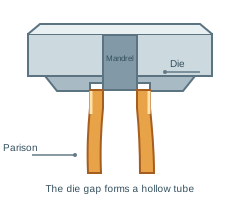
Extrude the parison
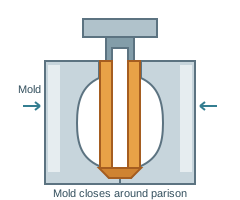
Close the mold around the parison
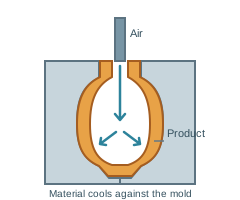
Blow into the mold
Why does the parison matter?
The parison wall-thickness profile, diameter, and length affect how material is distributed as it stretches into the mold cavity. This influences finished-wall thickness, strength, weight, and defect risk. Uncontrolled thin or thick areas, unevenness, or instability can cause weak spots, poorly formed corners, and inconsistent weight. A programmed thickness profile does not need to be equally thick throughout.
How does parison quality affect the final product?
A stable parison with a profile suited to the product helps manage material distribution and finished-wall consistency. Thickness variation can create thin spots, weak corners, or heavy areas that waste resin. Extrusion temperature, output, die gap, and thickness programming are adjustment factors. Finished distribution also depends on product geometry and local stretch.
What factors affect parison design and control?
Parison design and control depend on resin type, die-head design, extrusion speed, cooling rate, mold shape, blow ratio, and target wall thickness. Handles, corners, complex shapes, and areas with unequal stretching often require a programmed profile that places material where strength is needed.
How do manufacturers control parison production?
Prepare resin as required by its grade, including drying when needed, and control melt temperature, material feed, die settings, and machine timing. Monitor conditions during production and make appropriate real-time adjustments. Set the die gap and parison thickness program through the controller, and monitor parison diameter and finished-product quality.
Why should blow molding operators understand parison control?
Parison thickness distribution affects part weight, local strength, and material use. For bottles, jerrycans, automotive ducts, and irregular industrial parts, the goal is not simply a thicker parison; allocate resin according to finished geometry and load or strength requirements. During machine selection and mold design, review capacity; product shape, including handles, flat surfaces, and long local stretches; resin; die head; extrusion speed; cooling conditions; and thickness-control settings. Since 1976, Jonh Huah has manufactured blow molding equipment and can assess setup requirements based on product capacity, material behavior, mold design, and production speed.